Sleepy Mesquite update 12-19-2024


As I pulled up to the familiar stretch of desert that is Sleepy Mesquite, the landscape greeted me with its usual quiet resilience. The air was cool, the sky a pale blue, and the land seemed to be holding its breath—waiting, as I was, for the next chapter in its slow transformation. It’s been weeks since my last visit, and in that time, not a single drop of rain has fallen. The ground is dry, the plants stoic, and the changes are subtle, almost imperceptible. Yet, every trip out here brings new lessons, new challenges, and a deeper connection to both the land and myself.
Marking Boundaries: Four New Sentinels
The first task on my list was to continue the process of marking the boundaries of Sleepy Mesquite. This time, I placed four more boundary markers—two on the northern border and two on the western border. It’s a simple act, but one that feels deeply significant. Each marker is a statement of intent, a way of saying, “This is where the work begins. This is where restoration happens.”
Walking the perimeter, I was struck by how these markers are more than just physical objects. They represent the edges of possibility, the lines within which I can experiment, learn, and grow. Setting them in place required careful attention to the lay of the land, the subtle rises and dips, the way the wind moves across the surface. I found myself pausing at each spot, imagining what this area might look like in a year, or five, or ten. Will there be shade here? Will the soil be richer, the air cooler, the wildlife more abundant?
Boundary work is foundational in permaculture. It’s about understanding limits, respecting neighbors, and creating a space where nature and human intention can meet. With each marker, I felt a sense of progress—a small but meaningful step toward the vision I hold for Sleepy Mesquite.
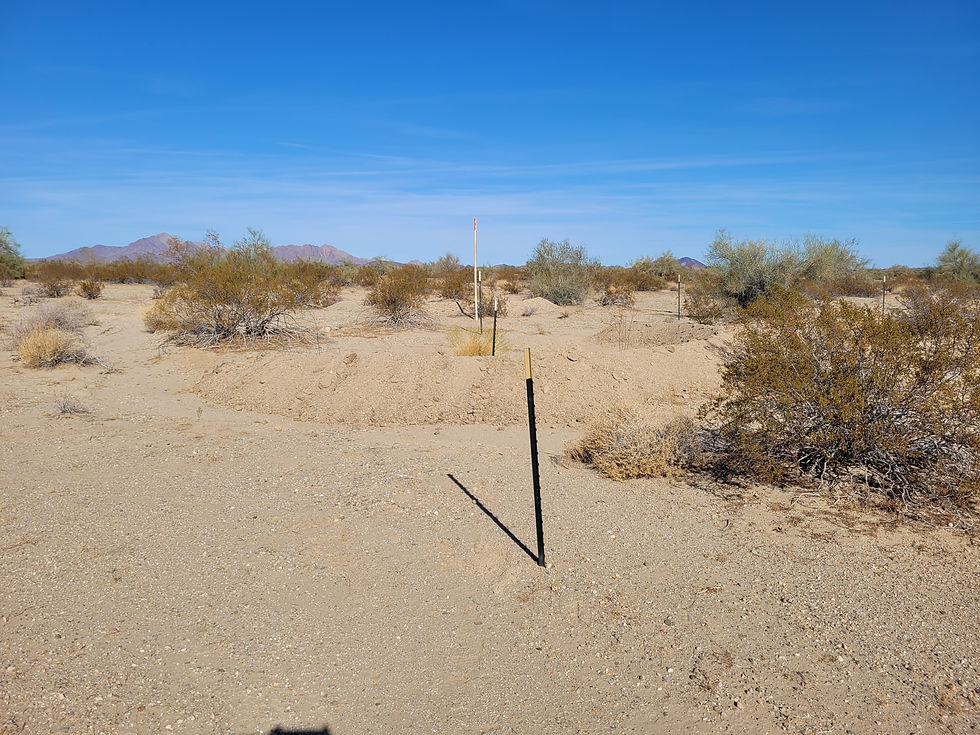
In permaculture, the concept of the “edge effect” is a powerful reminder that the boundaries between different environments are often the most dynamic and productive places in a landscape. I couldn’t help but think about how these lines are more than just property demarcations. They represent the meeting point between cultivated intention and wild possibility, between what is managed and what is left to nature.
Edges are where diversity thrives.
In the context of Sleepy Mesquite, these newly marked boundaries will become transition zones—places where the restored land I’m nurturing meets the surrounding desert. Over time, I expect to see unique plant and animal communities developing along these edges, benefiting from the resources and shelter provided by both worlds. By thoughtfully marking and eventually managing these boundaries, I’m not just defining the limits of my project; I’m also creating opportunities for increased biodiversity, resilience, and beauty at the very margins of Sleepy Mesquite.
Earthwork Maintenance: Digging Deeper After the Storm

Next, I turned my attention to the first earthwork, which had taken the brunt of tropical storm Hilary’s force earlier the previous year. The storm brought much-needed rain, but it also washed in a thick layer of silt, filling the basin and threatening its ability to capture future water. On my last trip, I began the process of removing this silt, but today I found myself digging even deeper.
The work was hard. The sun was already climbing, and the soil, though loose on top, quickly gave way to compacted layers below. Each shovel full was a reminder of the storm’s power and the land’s vulnerability. I worked slowly, mindful of the need to preserve the earthwork’s shape and function. The deeper I dug, the more I realized how much effort goes into maintaining these systems. It’s not enough to build them once and walk away; they require some care, attention, and adaptation.
As I cleared the last of the silt, I thought about the cycles of disturbance and renewal that define this place. The storm was a setback, but it was also an opportunity—a chance to learn, to improve, and to recommit to the process. The earthwork is now ready for the next rain, whenever it comes, and I’m hopeful that it will perform even better than before.
Planting a Palo Verde: A New Addition, A Lesson in Boundaries
One of the highlights of this trip was bringing out a Palo Verde tree to plant near the first earthwork. The Palo Verde is a remarkable species, perfectly adapted to the desert’s harsh conditions. Its green bark photosynthesizes even when its leaves drop, and its roots help stabilize the soil and fix nitrogen, improving fertility for other plants. It also produces edible seeds for both man and beast.
This particular tree was destined to be planted a few feet off-site, as about one-third of the first earthwork actually lies outside my property boundary. It’s a quirk of the land, a reminder that boundaries are sometimes fluid, shaped by history, topography, and circumstance, but mostly my own hastiness. While I assure you that all future earthworks will be fully on my property, this tree is a gesture of goodwill—a way of extending the benefits of restoration beyond my own lines.

I planted the Palo Verde in the same way as the last one, following the method described in my previous post. The process is meditative: digging the hole, amending the soil, positioning the tree, watering it in, and mulching to retain moisture. Each step is an act of care, a way of honoring the tree’s potential and the land’s capacity for renewal.
As I worked, I reflected on the importance of collaboration and generosity in permaculture. Sometimes, the best thing we can do is share our resources, our knowledge, and our efforts with others—even if it means planting a tree just beyond our own fence.
Observing the Land: Subtle Changes, Quiet Growth
With the major tasks complete, I took some time to walk the site and observe the land. The lack of rain since my last visit was evident—the soil was dry, the air still, and the plants holding steady. Yet, there were signs of resilience. The first Mesquite tree, planted a month ago, was still alive. Its leaves were green, and new branches had begun to emerge, reaching out into the open desert with quiet determination.

Elsewhere, the changes were more subtle. The grasses and wildflowers that had sprung up after the last rains were now dormant, waiting for the next opportunity to grow. Animal tracks crisscrossed the earth, evidence of nocturnal visitors making their way through the landscape. The earthwork itself, though battered by silt and storm, was holding its shape, ready to capture water when it finally arrives.
I was reminded that permaculture is a long game. Progress is measured in seasons, not days. Sometimes, the most important work is simply to observe, to listen, and to wait.
Health and Fitness: The Personal Side of Permaculture
All this digging, lifting, and walking made me acutely aware of my own physical limits. By the end of the day, I was exhausted—more so than I expected. My muscles ached, my breath was short, and I found myself longing for a cold drink and a comfortable chair. It was a humbling experience, and one that prompted some reflection on the role of health and fitness in permaculture work.
Working the land is demanding. It requires strength, endurance, flexibility, and resilience. The tasks are varied—digging earthworks, hauling mulch, planting trees, repairing fences—and each one tests a different aspect of physical fitness. Over time, I’ve come to see that my ability to care for Sleepy Mesquite is directly tied to my ability to care for myself.
Permaculture teaches us about the interconnectedness of systems. The health of the land is linked to the health of the people who steward it. If I neglect my own well-being, I risk undermining the very project I’m trying to build. This realization has motivated me to pay more attention to my fitness—to stretch before working, to take breaks when needed, to stay hydrated, and to eat nourishing food.
There’s also a mental and emotional component. The work can be repetitive, frustrating, and slow. It’s easy to get discouraged, especially when progress is hard to see. Maintaining a positive mindset, practicing patience, and celebrating small victories are just as important as physical strength.
Today, I didn’t have the energy to work on the second earthwork. At first, I felt guilty, as if I was letting the project down. But then I remembered that rest is part of the process. Permaculture is about working with nature, not against it—including our own nature. By listening to my body and honoring its needs, I’m practicing the same principles I apply to the land.
Looking Ahead: Lessons from Stillness
As the sun began to set, casting long shadows across Sleepy Mesquite, I took a moment to reflect on the day’s work. The land is quiet, waiting for rain, and the changes are slow. But beneath the surface, life is stirring. The new boundary markers stand as sentinels, the earthwork is ready for the next storm, and the trees are growing—one on my property, one just beyond.
I’m reminded that restoration is a journey, not a destination. It’s a process of learning, adapting, and growing—both for the land and for myself. The challenges are real, but so are the rewards. Each trip out here deepens my understanding of the desert, of permaculture, and of my own capacity for resilience.
Conclusion: A Personal Reflection
As I pack up my tools and prepare to leave, I feel a sense of gratitude—for the land, for the lessons, and for the opportunity to be part of this unfolding story. Sleepy Mesquite is teaching me about boundaries, about patience, and about the importance of caring for both the earth and myself.
There will be more storms, more silt, more days of exhaustion. But there will also be growth, renewal, and moments of quiet beauty. I look forward to the next visit, to seeing how the land responds, and to continuing this journey—one marker, one tree, one step at a time.
Thank you for following along, and for sharing in the work of restoration. Until next time, may we all find strength in the slow, steady progress of nature—and in the care we give to ourselves and the world around us.


Comments