
Update on Sleepy Mesquite 11-7-2024

Returning to Sleepy Mesquite After a Year+
After more than a year away, my return to Sleepy Mesquite was filled with a mix of excitement and apprehension. The memories of my last visit lingered in my mind, especially in the wake of Tropical Storm Hilary, which had left its mark on the landscape and community.
Apprehensions and Preparations
As I planned my trip, I couldn’t shake the feeling of uncertainty. The aftermath of a significant weather event can be unpredictable, and I wanted to be ready for anything. My preparations included:
Researching potential road and trail hazards.
Packing emergency supplies, just in case.
Ensuring my vehicle was in top condition for the journey.
I knew that over-preparation was better than under-preparation, especially when venturing back to a place that had recently faced challenges.
The Journey to Sleepy Mesquite
As I made my way towards Sleepy Mesquite, I was relieved to see that Interstate 10 showed few signs of the damage that Tropical Storm Hilary had caused. The road was clear, and it seemed as though the community had rallied together to recover quickly.
As for the Bradshaw Trail it was open, but I was not too surprised to see some damage close to the Wiley Wells Campground. Portions of the trail that run along side a wash were washed away. Trail crews simply rerouted the trail around the washed out areas, no big deal. But then 6miles further down the trail the Bradshaw Trail simply disappeared and opened up into a huge wash that wasn't there before. I simply follow the tire marks of my off road predecessor down the wash for nearly a mile, wondering if the trail wound reappear or not and nearly getting stock in the sand there in. The trail finally did reappear as if it were under the wash the whole time. After that just one large rut in the trail that was easy enough to circumnavigate.
Reflections on the Return
Arriving in Sleepy Mesquite felt surreal. The familiar sights and sounds greeted me, but I was also aware of the changes that had occurred during my absence. It was a blend of nostalgia and curiosity about how the site had adapted and healed. In retrospect, my apprehensions about the trip were valid but ultimately unnecessary. The resilience of Sleepy Mesquite was evident, and I was grateful to be back in a place that holds so many memories for me.

Observations on Earthworks After the Recent Event
I was surprised by how little damage there was to the earthworks that we had built. The earthwork that was supposedly on the corner of the site suffered damage similar to what the previous one experienced during the monsoonal event two years earlier. However, I was happy to see that the first earthwork, which had been reinforced, held up beautifully, although it was completely infilled with silt. Other than that, the site was virtually unchanged.

Key Takeaways
The resilience of the earthworks was impressive despite the recent weather challenges.
The corner earthwork showed vulnerability similar to past events, highlighting areas for potential improvement.
The reinforced earthwork demonstrated the effectiveness of our modifications, even if it required some cleanup.
Overall site stability remained intact, indicating that our foundational work has been successful.

Next Steps
Moving forward, we will need to:
Assess the damage to the corner earthwork and determine necessary repairs.
Evaluate the silt buildup in the reinforced earthwork and plan for its removal.
Consider additional reinforcements or design adjustments based on the recent weather patterns.
Monitor the site closely for any further changes or vulnerabilities.
Surveying the Property Boundary
Continuing with the blog, one of the tasks I performed on the site was conducting a more accurate survey of the property boundary. During this process, I discovered that the second earthwork was not on the site at all. Oops! As a result, that earthwork was abandoned.

Placing Permanent Boundary Markers
After clarifying the property boundaries, I began placing the permanent boundary markers. This step is crucial for maintaining clear and defined property lines moving forward.

Cleaning Up the First Earthwork
Next, I focused on cleaning up the silt out of the first earthwork. This cleanup was essential to make room for the first tree, which I brought to plant.
Planting the First Tree
With the earthwork partially cleared, I was excited to plant the first tree. This marks a significant step in the development of the site and contributes to the overall landscape and ecosystem.
Tree Planting Procedure
Planting the tree was the highlight of the trip. Here’s a detailed overview of the steps I took:
1. Digging the Hole
I began by digging a hole about twice the size of the pot the tree was in.
2. Installing the Perforated Pipe
Next, I placed a 2-inch diameter perforated pipe in the hole for deep watering purposes. This helps prevent evaporation.
3. Filling the Hole
After that, I filled the hole about halfway with freshly hauled-out topsoil.
4. Removing the Tree from the Pot
I then carefully removed the tree from its pot.
5. Completing the Filling
Once the tree was positioned correctly, I filled in the rest of the hole with the topsoil.
6. Adding Mulch
Finally, I placed a thick layer of mulch on top to further reduce evaporation.
This method not only ensures the tree's healthy growth but also conserves moisture in the soil.
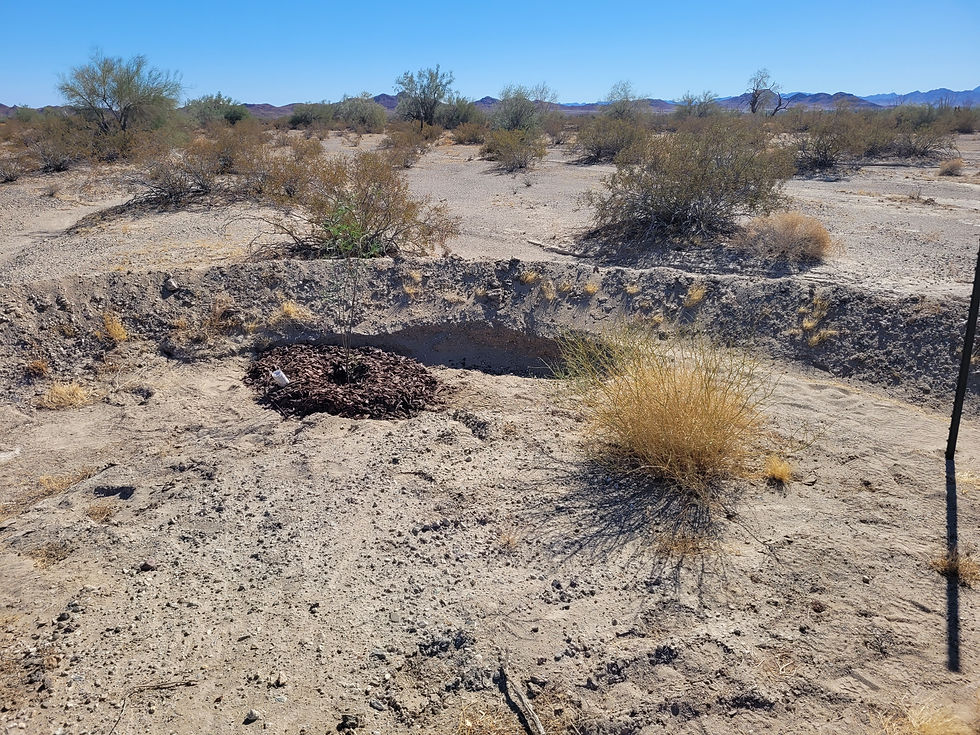
Building the Second Earthwork
Next, I started building the second earthwork located on the property, this time. I measured out the placement of the earthwork using a tape measure, a 10-foot long string, and two stakes to draw out another half circle. I then began to dig it out.

Reflections on a Productive Overnight Stay
Time was short for my overnight stay, a fleeting moment in an otherwise busy schedule. Despite the limited hours, I managed to accomplish a significant amount, especially considering I was navigating this experience entirely on my own this time. The solitude, rather than being a hindrance, became a source of strength and focus. I immersed myself in the task at hand, driven by a sense of purpose and curiosity. As I moved through the landscape, I felt a great sense of accomplishment wash over me. Each step I took was not just a physical movement but a deliberate engagement with my surroundings. I took the time to survey the land meticulously, noting the subtle changes that had occurred since my last visit. The interplay of nature and human influence was striking, and I was eager to document these observations. The natural changes were particularly fascinating. I noticed how the seasons had shifted the colors of the foliage, transforming the vibrant greens of summer into the warm, earthy tones of autumn. The trees, once fully clothed in leaves, now stood tall with branches that swayed gently in the breeze, revealing the intricate patterns of their bark. I took notes on the wildlife I encountered as well, observing the behavior of birds flitting from branch to branch and the rustle of small creatures in the underbrush. Each detail contributed to a richer understanding of the ecosystem and its ongoing evolution. On the other hand, the man-made changes were equally noteworthy. I documented new structures that had emerged since my last visit, each telling a story of progress and adaptation. There were signs of development: paths that had been cleared. These additions reflected the human desire to connect with nature while also leaving an imprint on the landscape. I was particularly struck by how these developments coexisted with the natural environment, sometimes harmoniously and other times in stark contrast. As I took notes, I felt a deep satisfaction with all that I had accomplished. The act of documenting my observations was not just about recording facts; it was a way to engage with the world around me and reflect on the changes that have occurred over time. I realized that this process of observation and notation was as much about personal growth as it was about the physical changes I was witnessing. Each note I took was a step towards understanding my place within this ever-evolving tapestry of nature and humanity. In conclusion, my brief overnight stay, though limited in time, was enriched with meaningful experiences and insights. The combination of solitude, observation, and reflection allowed me to appreciate the complexities of the environment, both natural and constructed. I left with a sense of fulfillment, knowing that I had not only completed my tasks but had also deepened my connection to the land and its stories.


Comments